- Architecture
- Construction Management
- Urban Design
- City, Life & Mobility
- Living & Accommodation
- Office & Working Environments
FOUR Frankfurt


A Vertical Urban Building Block
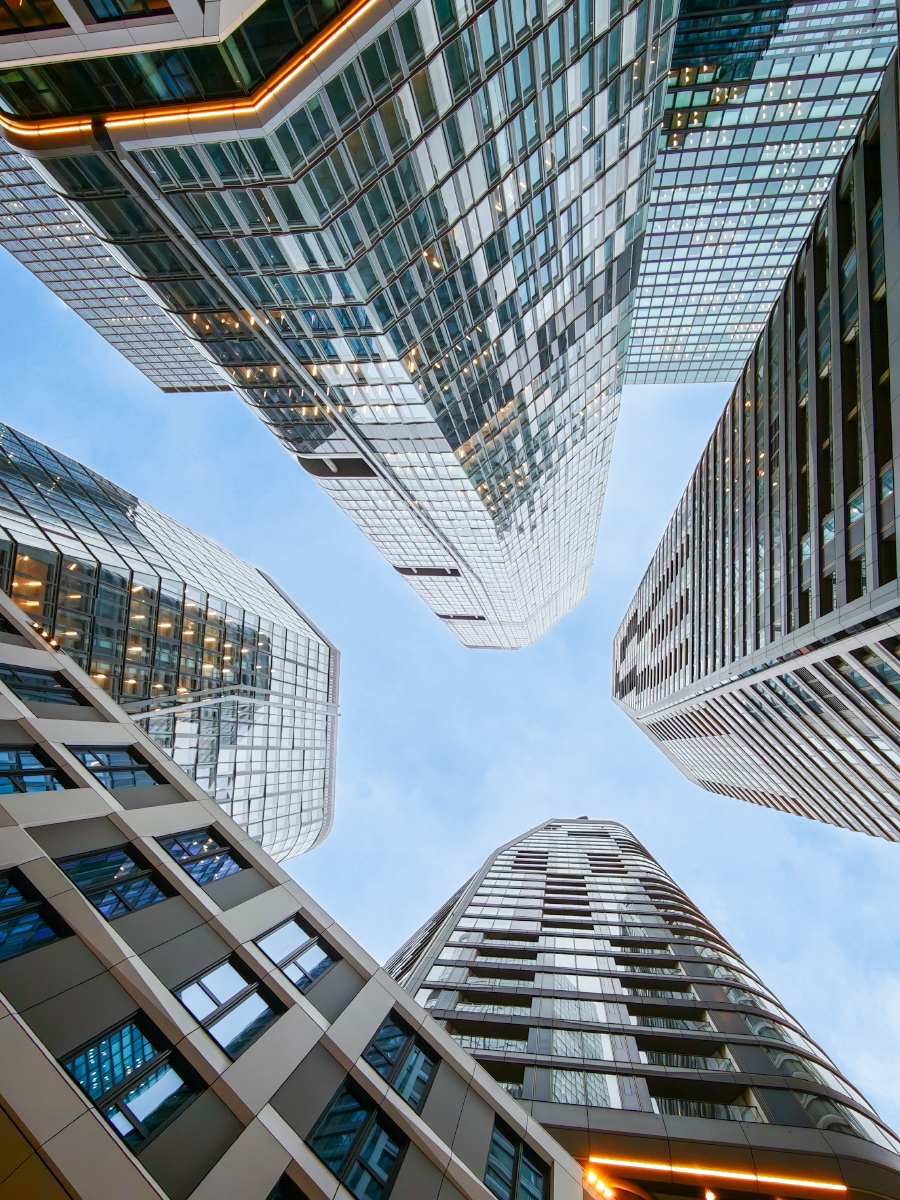
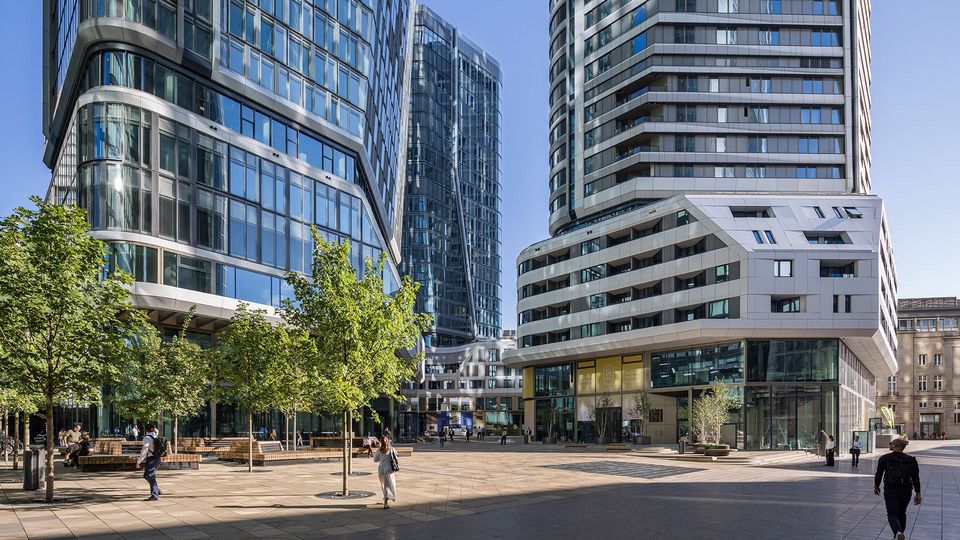
FOUR Frankfurt transforms an urban plot that had been sealed off for almost half a century into an open and diversely used quarter, the “city for all”. The four towers form an ensemble that interweaves residential, workspaces, hotel use, gastronomy, and social infrastructure. A monofunctional banking location becomes a lively urban district that brings together different user groups, circulation routes, and rhythms of daily life.
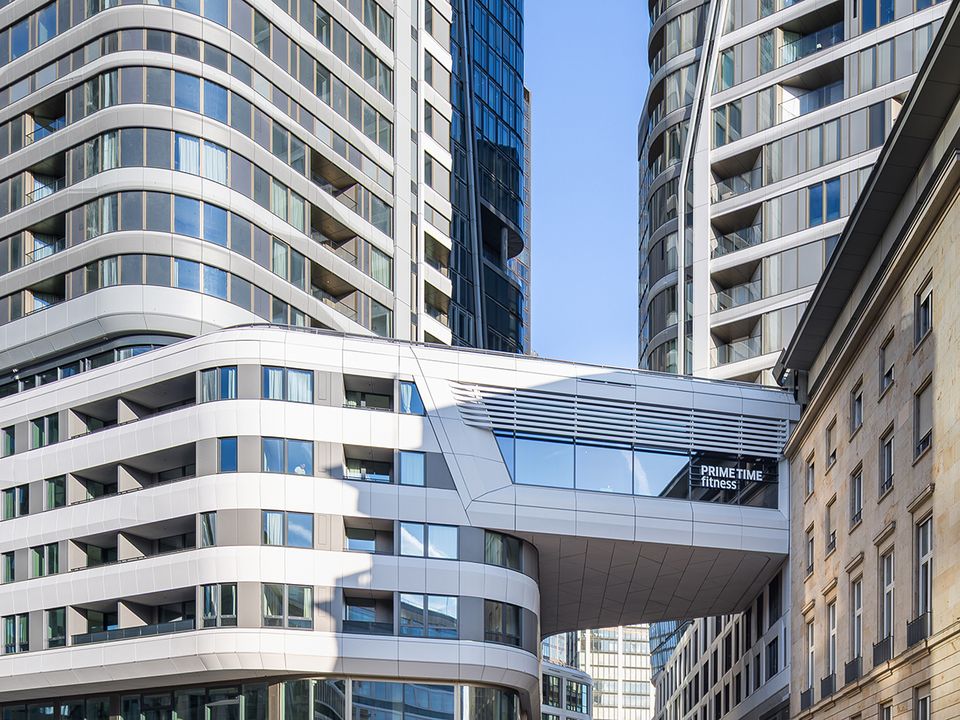
Four towers with a connecting podium as a spatial focal point
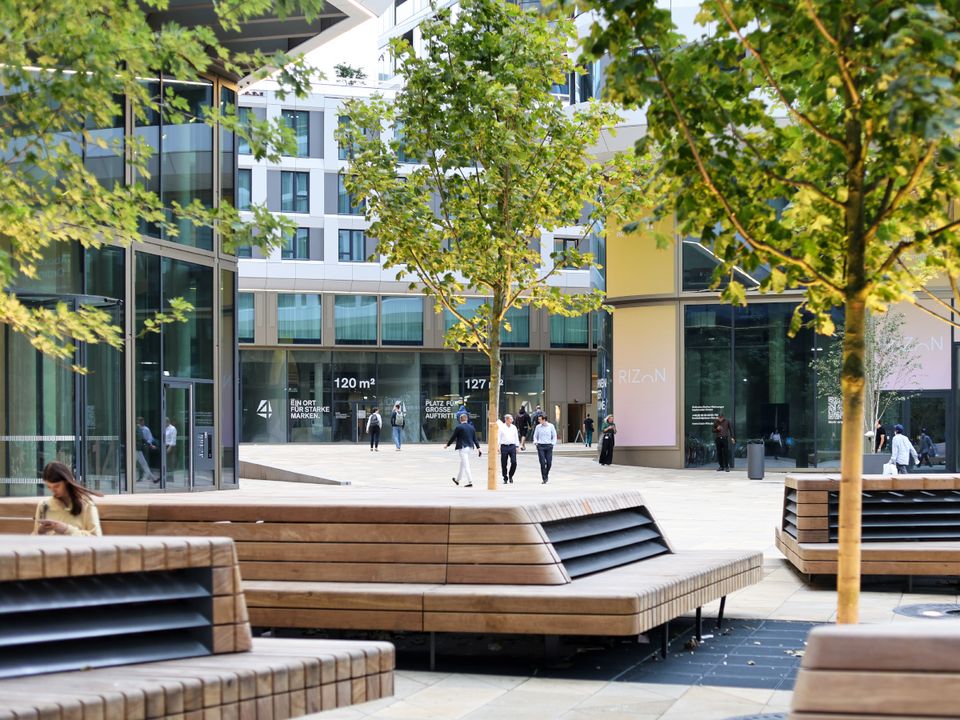
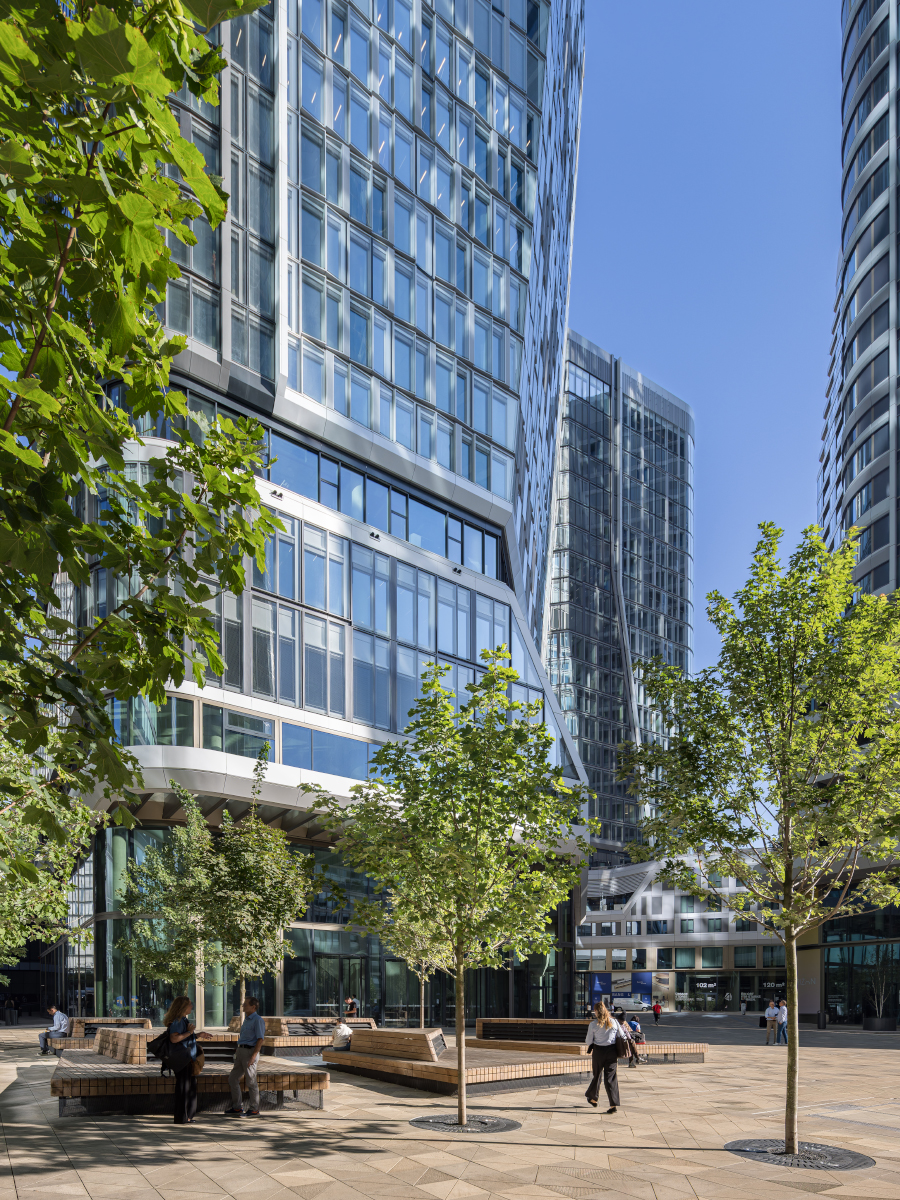
Publicly accessible open spaces in the midst of an inner‑city site closed off for 45 years
Maximum mix of uses: 47% offices, 36% residential, 12% hotels & serviced apartments, and 5% retail, gastronomy, childcare, fitness, wellness, health
Modular planning with more than 90 digital models for efficient coordination and precise execution
Complex construction logistics within a dense urban context: up to 150 lorry deliveries and 2,000 workers per day
Sustainability pioneer: first German project to receive the DGNB Deconstruction Certificate & first application of DGNB “Vertical Cities”
For more than 45 years, the former Deutsche Bank site was completely closed and inaccessible to the public. FOUR Frankfurt opens it up and connects with its surroundings on multiple levels. The multi‑storey podium links the towers, structures circulation and functions, creates coherent public areas and landscaped spaces, and forms a permeable spatial and circulation system for the entire quarter and the wider inner‑city area. The project thereby becomes a dynamic focal point within a 15‑minute walking radius.

Public terraces, paths and squares create new spaces for encounter, movement and events. The district is fully accessible on foot and optimally connected via public transport. The mixed uses generate diversity throughout the day and into the evening. FOUR Frankfurt is therefore less a conventional high‑rise scheme and more an inner‑city ecosystem that connects living, working, staying and daily amenities.
Two towers, including one of the tallest office high‑rises in Germany, provide flexible working environments. The floorplates are adaptable and designed for long‑term use cycles: clear structural grids enable efficient layouts divisible in many ways; modular fit‑out concepts allow varied workplace configurations without major intervention in the building structure; the separation into landlord and tenant fit‑out ensures predictable expansion strategies and high adaptability for future leasing cycles. The office towers form a clearly recognisable address on the skyline and the new center of Frankfurt.

The residential and hotel towers offer a broad spectrum of urban living and accommodation typologies. Different apartment and room types, complemented by long‑stay options, allow various living forms to coexist in the city centre. Both uses are closely linked to the public areas within the podium and benefit from short distances to gastronomy, daily amenities, fitness and services. The vertical organisation creates separation from the street level while maintaining strong visual connections to the city.
Implementing an ensemble of this scale requires a clearly structured planning process. The ARGE UNS + HPP developed a modular and BIM‑based methodology that divided the project into manageable units. More than 90 digital models, including 38 primary geometry models, structured the planning by building sections, storeys, functions, and fit‑out stages. This digital consistency was the prerequisite for planning the high‑rise ensemble synchronously despite spatial complexity.
“The deliberate decision in favour of open‑BIM planning, the division into digitally manageable sub‑models and modular guidelines, and the early definition of prefabrication options formed the basis for successful planning.”
Werner Sübai, Senior Partner HPP
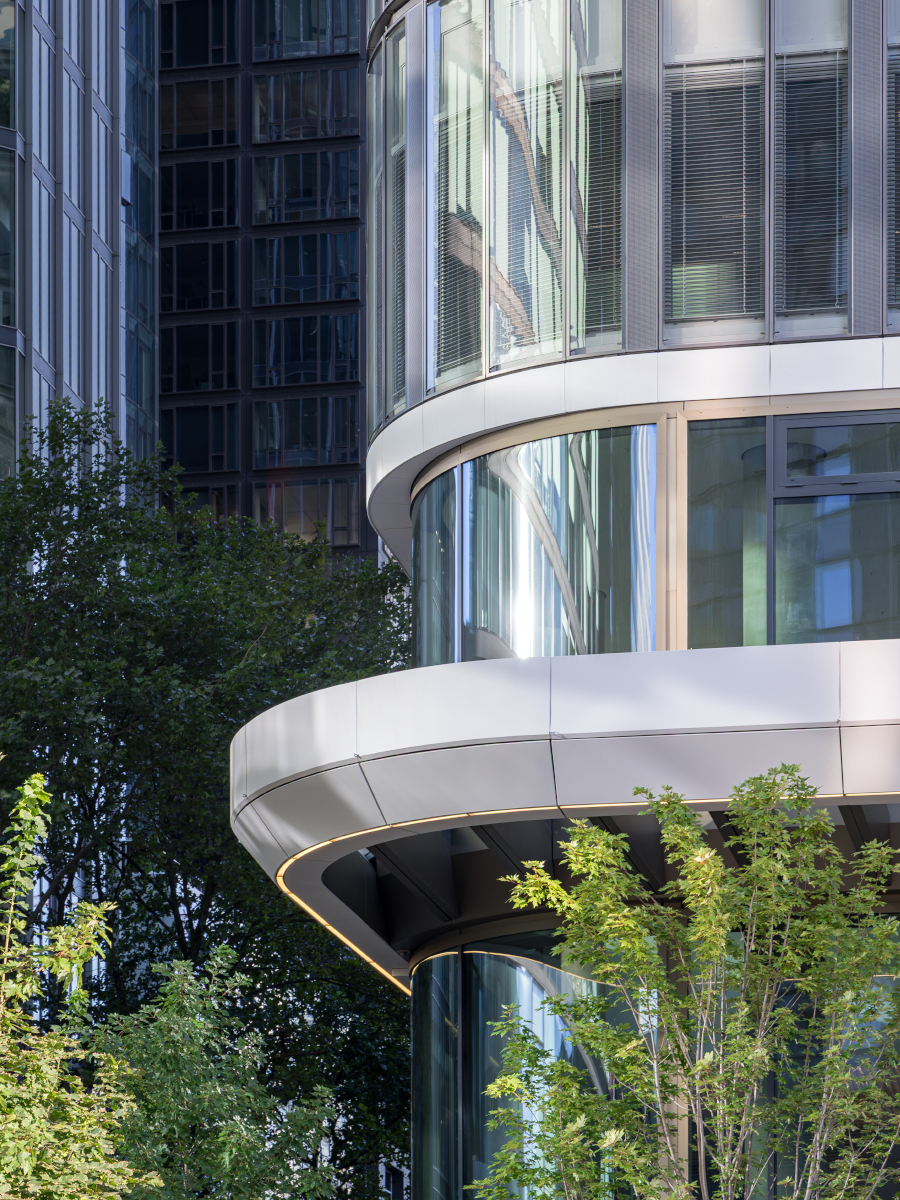
The façade responds to differing uses, orientations, and viewing distances through variations in module depth, glazing ratios and pixel structures. With around 100,000 square metres of façade area and approximately 20,000 elements, the development of a clearly coded module system was crucial. Distinct module types operable, inclined, curved, opaque or transparent were consolidated in a concise element catalogue. The systematisation preserved the architectural diversity of the initial design while ensuring precision in execution.
The construction site lies within tightly woven inner‑city structures. Material flows, prefabricated components, technical modules, and interior fit‑out elements had to be coordinated daily within extremely limited space. A high degree of prefabrication, from structure to fit‑out modules, shortened construction time and minimised disruption to the surroundings. As a result, one structural storey could be completed in four to five days.
For the deconstruction of the existing buildings, the quarter received a DGNB Deconstruction Certificate, awarded for the first time in Germany. It confirms that materials were carefully separated, pollutants professionally removed, and elements such as parts of the listed façades dismantled for future reuse.
As a pilot project for the DGNB “Vertical Cities” scheme, FOUR also follows a certification framework that assesses buildings and the district together. A comprehensive catalogue of individual measures interlocks, including renewable energy generation through geothermal systems, smart digital monitoring and extensive biodiversity concepts. More than 2,300 bicycle parking spaces are provided.
Implementing this vertical city requires the highest degree of coordination, discipline and design clarity. Through close collaboration between ARGE UNS + HPP, specialist planners, the client and an international planning team, a district emerged that combines technical complexity, urban responsibility, and user‑oriented diversity.
- Project
- FOUR
- Location
- Frankfurt am Main
- Client
- Groß & Partner Grundstücksentwicklungsgesellschaft mbH
- Partners
- Design: UNStudio / Planning & execution: ARGE UNS + HPP
- GFA
- 290.000 m²
- Completion
- 2026
- Uses
- Residential, office, hotels, gastronomy, retail, social infra-structure, public spaces
- Certifications
- DGNB Deconstruction Certificate, DGNB “Vertical Cities”